
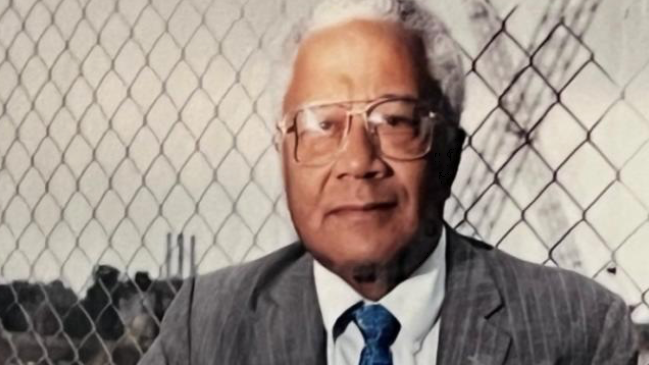
Tribute to a global visionary: The extraordinary life of Dr. Karl Dwight Gregory
Dr. Sheila T. Gregory
There are lives whose influence is so expansive that telling their story means telling the story of a city, a movement, and a nation. Dr. Karl Dwight Gregory, born March 26, 1931, stands among the most consequential yet understated figures in American public life. Economist, civil rights strategist, educator, institution builder, soldier, and global advocate, he dedicated his life to advancing justice through intellectual rigor, community service, and institution building. His journey connected Detroit, Washington, D.C., Ann Arbor, Africa, Asia, Europe, and the Caribbean, yet he remained deeply rooted in the urban city he loved. As he often said, “I’m a Detroiter. Even though I’ve left many times, I’vealways come back.”
Dr. Gregory grew up in Detroit’s historic Hastings Street neighborhood near West Grand Boulevard, a vibrant but racially segregated community that shaped his early awareness of inequality. His parents, Sybil Louise Wynter Gregory and Bertram Vincent Gregory, immigrated from Kingston, Jamaica, bringing a strong commitment to education, service, and community leadership. His mother became one of Detroit’s first pioneering Black registered nurses at a time when Black in the US were not able to pursue such a degree. His father owned a tailoring business and was active in civic and Garveyite organizations. Their example instilled discipline, responsibility, and public service.
From ages three to ten, Karl lived in Kingston, Jamaica, with relatives, including his uncle Dr. Oswald Anderson, who served as mayor of Kingston. He attended Munro College, a highly regarded British-style boarding school known for academic excellence and discipline. There he gained advanced preparation in mathematics and developed a broad perspective shaped by colonial-era Jamaican society. Upon returning to Detroit, however, he encountered racism and segregation in ways he had not previously experienced. The contrast between Jamaica’s class distinctions and America’s racial hierarchy profoundly influenced his understanding of injustice and ultimately shaped his life’s work.
Returning to Detroit before World War II, Gregory witnessed the vitality of Black Bottom and Paradise Valley, thriving centers of Black business, culture, religion, and civic life. He also watched those communities later destroyed through urban renewal projects and I-75 freeway construction that intentionally displaced thousands of Black families and businesses. The demolition of these neighborhoods left a lasting impression and strengthened his commitment to confronting housing discrimination, economic inequality, and policies that undermined Black communities.
At age sixteen, he entered Wayne University, later Wayne State University. Initially pursuing pre-medical studies, he struggled academically before discovering economics under the mentorship of Professor Harvey Brazer. He excelled thereafter, developing interests in public finance, inequality, and policy analysis. While working various jobs to support himself, he became active in student government, the NAACP, Model United Nations, and other organizations that nurtured his leadership and civic engagement.
Following graduate study, Gregory volunteered for military service and entered the United States Army during the early years of desegregation. Through Officer Candidate School he was one of the few early Blacks to earn the rank of First Lieutenant and served as a fire-direction officer in Germany. Military service broadened his international perspective and reinforced his belief that institutional reforms, when consistently enforced, could transform social relationships and create opportunities for greater equality.
Upon completing his service, Gregory returned to academic life, finishing his master’s degree before enrolling at the University of Michigan under the G.I. Bill. In 1962, he became the first African American to earn a Ph.D. in economics and finance from the University of Michigan. His doctoral work deepened his expertise in fiscal policy, public finance, and economic development while laying the intellectual foundation for his future work as both scholar and activist.
That same year, Gregory accepted a position as a fiscal economist in the Executive Office of the President, serving under Presidents John F. Kennedy and Lyndon B. Johnson. While helping analyze national budgets, he simultaneously became deeply involved in the civil rights movement. His search for housing in Bowie, Maryland, near Washington, D.C., exposed him to discriminatory practices in suburban developments. Suspecting racial discrimination, he organized a testing effort with white colleagues to document unequal treatment and filed complaints with federal authorities. Working alongside civil rights organizations and veterans’ groups, he helped push the Kennedy administration toward action that resulted in Executive Order 11063, which prohibited discrimination in federally assisted housing.
Gregory’s activism expanded rapidly. He organized efforts supporting fair housing and voting rights, participated in demonstrations challenging residential segregation, and served among the civil rights strategists who helped plan the 1963 March on Washington for Jobs and Freedom. He also joined efforts responding to the murders of civil rights workers James Chaney, Andrew Goodman, and Michael Schwerner and was arrested during protests to desegregate Baltimore’s Gwynn Oak Amusement Park. In 1964, he resigned his federal position to support the Mississippi Freedom Democratic Party at the Democratic National Convention, joining Fannie Lou Hamer and others in one of the defining moral struggles of the Civil Rights Movement.
Returning to Detroit, Gregory became known as an “activist professor.” While teaching at Wayne State University, he continued working directly within the community. His leadership became especially important during the Northern High School student walkout of 1966. As students protested overcrowding, discrimination, and unequal educational conditions, Gregory volunteered as principal of the Freedom School established to support them. With volunteer teachers, church facilities, and community support, the school served more than 1,000 students and demonstrated the power of grassroots educational action.
The Detroit uprising of 1967 marked another defining moment in his life. Gregory rejected descriptions of the event as a mere riot, arguing instead that it was a rebellion rooted in longstanding systemic injustice. Having grown up near the area and having watched his father’s business damaged during the unrest, he understood both the frustration and structural conditions that fueled the conflict. During the uprising, he documented events through photographs and film while also warning residents about approaching military deployments and potential violence.
His analysis of Detroit’s crisis identified five interrelated causes: educational inequality, exploitative economic systems, capital extraction from Black communities, housing discrimination, and systemic racism embedded within institutions. This framework would guide much of his later work in economic development and institution building.
After 1967, Gregory focused on transforming protest into lasting economic power. Working with leaders including Rev. Albert Cleage Jr., Joseph L. Hudson, Henry Ford II, and Congressman Charles Diggs, he helped establish the Citywide Citizens Action Committee and the Federation for Self-Determination. These organizations sought not merely reform but the creation of institutions owned and controlled by the Black communities they served.
Out of this vision emerged a comprehensive strategy centered on three goals: establishing a Black-owned bank, developing Black-owned businesses, and expanding community-controlled housing. Gregory helped launch the Inner-City Business Improvement Forum (ICBIF), which mobilized hundreds of Black professionals including lawyers, accountants, engineers, and business leaders to support entrepreneurship and economic self-determination. The organization became a major force in developing Black-owned enterprises throughout Detroit.
In 1969, Gregory helped organize the Caucus of Black Economists, now known as the National Economic Association, serving as its first president. The organization expanded opportunities for Black economists and increased African American participation in economic scholarship and public policy discussions.
His commitment to community development extended into housing initiatives. Through ACCORD, Inc., which he founded and led, Gregory advanced cooperative ownership models that sought to transform renters into owners and create wealth-building opportunities for low-income residents. Although economic conditions and institutional obstacles ultimately limited the organization’s success, its vision anticipated many contemporary approaches to community wealth building and cooperative housing development.
Perhaps his most enduring institutional achievement was helping establish First Independence National Bank in 1970. Recognizing that Black communities often generated deposits that were invested elsewhere, Gregory and his colleagues created a financial institution dedicated to reinvesting capital locally in Detroit. Serving as chairman and interim president, he helped develop the governance and lending structures that allowed the bank to support homeowners, entrepreneurs, and community development projects. Today, First Independence Bank remains one of the nation’s longest-operating Black-owned financial institutions.
Gregory also helped advance Minority Enterprise Small Business Investment Corporations, including Independence Capital Formation and PRIME, expanding access to equity capital for minority-owned businesses. He further supported the early development of Detroit’s Black United Fund, helping create philanthropic infrastructure dedicated to grassroots organizations and underserved communities.
Alongside his activism and institution building, Gregory maintained a distinguished academic career spanning nearly six decades. He taught at Wayne State University, the State University of New York at Buffalo, and Oakland University, where he served as assistant chancellor for urban affairs and later as professor of economics. His students remember him not only for academic rigor but also for his commitment to mentoring future leaders and encouraging public service. By the time of his retirement as Distinguished Professor Emeritus, he had influenced thousands of students across multiple generations.
Gregory’s work also extended far beyond Detroit. Through NAACP delegations and research initiatives, he investigated apartheid-era South Africa, including meetings with laborers, community leaders, and Winnie Mandela. His reports on apartheid were entered into the Congressional Record and highlighted the connections between political oppression and economic exclusion. He argued that sustainable justice required access to capital, ownership, opportunity, and equitable participation in economic life.
His global work included economic development assignments throughout Africa, research efforts in Puerto Rico, and service as a senior economic advisor to the People’s Republic of China through the United Nations in 1991. He also participated in a landmark ABC News satellite broadcast with Mikhail Gorbachev and Boris Yeltsin, moderated by Peter Jennings, reflecting his growing stature as an internationally respected economist and policy advisor.
Even after retirement, Gregory remained actively engaged in civic life. He served on numerous boards and commissions, including the Detroit Urban League, the NAACP, the Federal Reserve Bank of Chicago’s Detroit Branch, and UnitedWay for Southeastern Michigan. His contributions earned numerous honors, including Michigan Minority Business Advocate of the Year, the Entrepreneurial Pathfinder Award, and recognition from the Detroit Urban League for a lifetime of social justice and civil rights leadership.
Among the institutions that reflect his lasting influence is the Karl D. Gregory Cooperative House at the University of Michigan’s Inter-Cooperative Council. Having benefited from cooperative housing during graduate school, Gregory later made the down payment to secure the student cooperative home, reinforcing his belief that democratic governance and shared responsibility help develop future leaders.
On March 28, 2026, Detroit celebrated Dr. Gregory’s ninety-fifth birthday at the Charles H. Wright Museum of African American History. Civic leaders, scholars, students, colleagues, and family members gathered to honor a man whose work had shaped public policy, economic development, education, and civil rights for more than seven decades. The event recognized him as a scholar, strategist, mentor, and builder of institutions that continue serving communities today.
Two months later, at his Celebration of Life, his daughter, Sheila Gregory, reflected on the meaning of his legacy: Dr. Gregory did not simply witness history; he helped shape its direction. His life demonstrated that lasting change requires courage, vision, organization, and sustained commitment.
Above all, Dr. Karl Dwight Gregory described himself as an activist dedicated to community betterment. That commitment continues through the Dr. Karl D. Gregory Endowed Scholarship at Oakland University, which supports first-generation and underserved students while advancing his lifelong belief in education as a pathway to opportunity and justice.
Dr. Gregory was married to Tenicia Ann Banks Gregory for more than sixty years until her passing in 2022. Together they built a family grounded in love, service, and purpose. He is survived by his children Karin Diane Gregory, Sheila Therese Gregory (Stephen Brown), and Kurt David Gregory, and by his grandchildren Courtney Gregory Jones and Anthony Kelly Gregory Jones.
Dr. Karl Dwight Gregory transformed scholarship into action, protest into policy, and vision into enduring institutions. His life stands as a reminder that justice is not simply imagined. It is built through persistence, courage, and a commitment to ensuring that future generations inherit greater opportunity than those who came before them.