
Empowering Future Generations Through Racial Justice Leadership
By Sherri Kolade Photo by P. A. Greene
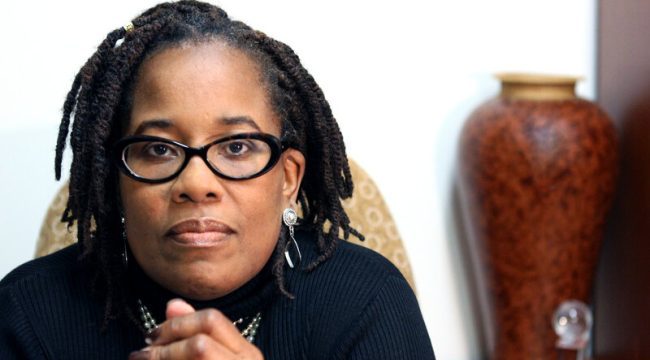
Dr. Karsonya Wise Whitehead’s upbringing in two worlds—Washington, DC’s chocolate city and South Carolina’s quiet dirt roads—shaped her story of race and identity. Summers spent on her grandparents’ farm in Lexington, South Carolina revealed the racial dynamics of the South, while WDC nurtured her intellectual growth and pride in her Black heritage.
After earning a history degree from HBCU Lincoln University, Whitehead studied at the University of Notre Dame, focusing on peace studies, social justice, and human rights. She returned to WDC, working with community organizations to advocate for racial justice and empower youth. “Black history belongs to us. It is written in the winds and on the walls, and no one can stop it. We’re written in pen, not in pencil,” she says, reflecting her commitment to future generations.
As president-elect of the Washington, D.C.-headquartered Association For the Study of African American Life and History (ASALH), Whitehead focuses on breaking down barriers for marginalized communities.
“America is not just going to be saved by those doing academic work. It’s going to be saved by those who have the heart to fight for what we believe is important and necessary,” she explains.
Her activism is deeply personal. As a wife and mother of three, she draws inspiration from the legacy she’s building for future generations. “I do the work for my children and for the children of my children because I rely so heavily on the lessons and legacy of my ancestors,” she says. “I think about how my work is helping to shape their memories and experiences for generations to come.”
Her commitment to racial and political justice is deeply intertwined with her family’s history, particularly the legacy of her great-great-grandfather, Moses Best, who was lynched by the KKK in the doorway of her great-grandmother’s childhood home because of his work in voter registration. His fight for justice and equality continues to fuel her work.
Whitehead’s advocacy also addresses the growing racial wealth gap, which she believes will widen amid economic challenges like the looming recession. “Once everything settles and we look at America’s new reality, I think it’s going to call for new strategies to address the same problems,” she says.
For Whitehead, the solution goes beyond legislation.
“The issue in this country is not just race—it’s class,” she notes. “Dr. King said that ‘If America does not use her vast resources of wealth to end poverty and make it possible for all of God’s children to have the basic necessities of life, she too will go to hell.’ The struggle for racial justice and economic justice are deeply intertwined and that’s the work that I’m focused on today,” the multi-hyphenate journalist, educator and prolific orator said.
This legacy is honored through her work at The Karson Institute for Race, Peace & Social Justice—a place that she established in her father’s name which she hopes solidifies the continued pursuit of justice within her family line. “They thought they were stopping my great-great-grandfather’s work and legacy by stopping him, but they didn’t,” Whitehead says. “It has lived on through me and will live on through my children.”
Whitehead’s passion for progress is rooted in the desire to make the world a little bit better. As a pastor’s kid, she takes seriously the notion that to whom much has been given much is required.
“Dr. King challenged us to make justice a reality for our children and that is what I am doing. I want to leave them with a desire for justice and a plan to make it happen,” she says. “I want them to understand that when they fall, and they will fall, that they fall on their back because in our family, we know that if we can look then we can get up.”
Sorry, the comment form is closed at this time.